



As an Amazon Associate, we earn from qualifying purchases.
Hoka pickleball shoes are not actually court shoes—Hoka specializes in road running footwear, not racquet sports—but some players still reach for their cushioned runners when heading to the court. If you already own a pair of Hoka road shoes and wonder whether they'll hold up for recreational pickleball, or if you're drawn to the brand's reputation for plush cushioning, this guide lays out exactly what you get (and what you give up) when you wear Hoka pickleball shoes on the court.
We'll cover three popular Hoka models—the Mach 6 for men and women, and the Arahi 7 for women—break down their construction, and explain who should consider them and who should steer toward a dedicated court shoe instead.
Hoka Pickleball Shoes: Quick Comparison
- HOKA Mach 6 (Men's) — Best for: Casual players who want lightweight cushioning in a neutral road runner — EVA sole and jacquard knit upper
- HOKA Mach 6 (Women's) — Best for: Women seeking moderate cushioning for light court use or cross-training — neutral, lace-up road runner
- HOKA Arahi 7 (Women's) — Best for: Women who overpronate and need maximum cushioning and stability off-court — memory foam insole, polyurethane sole
HOKA Mach 6 (Men's)
HOKA Mach 6 (Women's)
HOKA Arahi 7 (Women's)
Prices and stock update on Amazon — click through for the current listing.
HOKA Mach 6 (Men's) — Lightweight Road Runner for Casual Hoka Pickleball Shoes Use
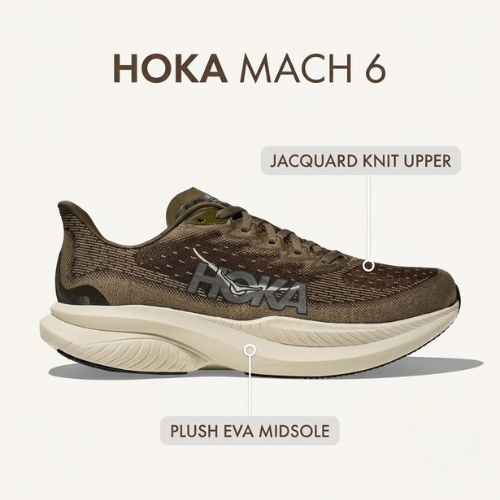
When you step onto the court in socks that are already tired from a long walk or errands, a lightweight shoe with moderate cushioning sounds ideal. The HOKA Mach 6 for men delivers exactly that: a jacquard knit upper that wraps your foot without extra weight, an EVA sole that softens impact on hard surfaces, and a neutral platform that lets your foot roll naturally.
Because it's built for road running, these Hoka pickleball shoes prioritize forward motion over side-to-side bracing. That means quick lateral dinks and sudden directional changes will test its limits faster than a true court shoe. If your game is mostly doubles, you stay near the kitchen line, and you value all-day comfort over explosive pivots, this runner can handle light recreational sessions.
Who it's for: Men who play pickleball casually—once or twice a week at a relaxed pace—and want one shoe that transitions from a morning jog to an afternoon game without changing footwear.
The jacquard knit upper breathes well during warm-weather play, but that same open weave means less abrasion resistance when you drag a toe during a lunge. The EVA sole will compress faster under the repetitive pounding of court drills than it would on a smooth road. Expect shorter tread life if you use these Hoka pickleball shoes exclusively for court time.
Click through to see current colorways and sizing availability for the men's Mach 6.
HOKA Mach 6 (Women's) — Neutral Hoka Pickleball Shoes for Light Court Use
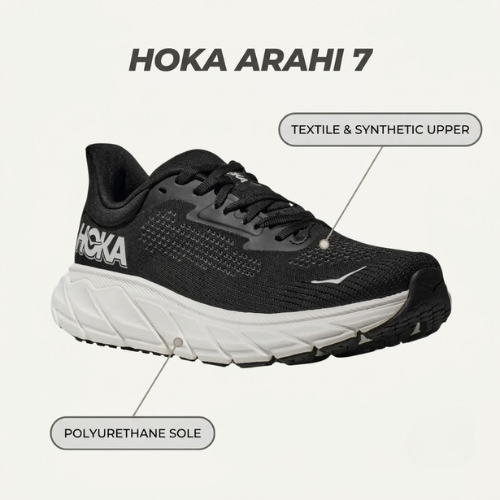
Many women who already run in the Mach 6 wonder if it will survive a weekly pickleball game. The women's version shares the men's DNA: jacquard knit upper, textile lining, EVA sole, and a neutral geometry that doesn't interfere with your natural stride. It's designed for forward propulsion on pavement, not the sharp cuts and sudden pivots that happen at the non-volley zone.
If your sessions are social doubles where you value comfort over competition, these Hoka pickleball shoes deliver enough underfoot cushioning to keep your feet happy through a two-hour round-robin. The lace-up closure lets you dial in a snug fit, and the moderate cushioning spreads impact across the midsole so you don't feel every thud on a hard gym floor.
Who it's for: Women who play pickleball for fun once or twice a week, prefer a shoe they can also wear for walks or errands, and don't need the reinforced sidewalls of a dedicated court shoe.
Because the Mach 6 lacks the reinforced toe cap and sidewall support found in true court shoes, aggressive singles players and those who drill frequently will outgrow its capabilities quickly. Save this model for light doubles or cross-training, and budget for a court-specific pair when your game intensity ramps up.
Check the Amazon listing for available widths and color options.
HOKA Arahi 7 (Women's) — Maximum Cushioning Hoka Pickleball Shoes with Stability
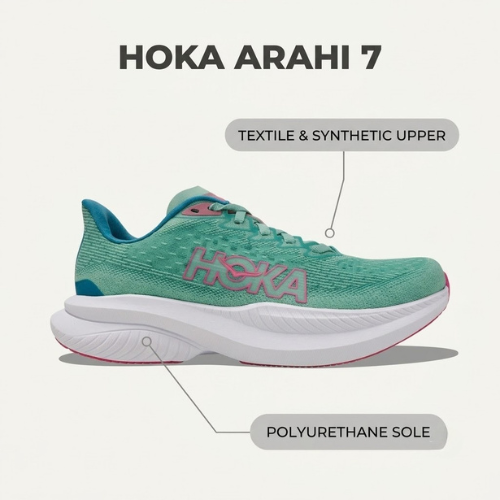
If your ankles roll inward when you run—a gait pattern called overpronation—and you crave plush underfoot feel, the HOKA Arahi 7 for women steps up with built-in stability. Its textile and synthetic upper wraps the midfoot more snugly than the Mach 6, the polyurethane sole offers firmer rebound than EVA, and the memory foam insole molds to your arch for personalized support.
The Arahi 7 is engineered for road and treadmill running, not the multidirectional stops and starts of pickleball. Maximum cushioning feels luxurious on straight-line pavement, but that same stack height can reduce court feel and slow your reaction time when you need to change direction fast. The overpronation correction is a benefit if you need it—but it can feel restrictive if your foot already tracks neutrally.
Who it's for: Women who overpronate during running, want one shoe that handles both jogging and very casual pickleball, and prioritize cushioning over agility on court.
The memory foam insole is a standout feature for all-day wear off court, but on court it adds another layer that can dull feedback from the playing surface. If you play more than twice a week or compete in USA Pickleball sanctioned tournaments, a dedicated court shoe with a lower profile and reinforced upper will serve you better than these Hoka pickleball shoes.
See the full range of sizes and current availability on Amazon.
Which Hoka Pickleball Shoes Should You Actually Buy?
- Casual men playing doubles once a week: The HOKA Mach 6 (Men's) offers lightweight cushioning and breathability without demanding a separate court-only shoe.
- Women who want a dual-purpose shoe for light court time and errands: The HOKA Mach 6 (Women's) balances moderate cushioning with a neutral platform that works for most foot types.
- Women who overpronate and play very casually: The HOKA Arahi 7 (Women's) adds stability and maximum cushioning, though its road-runner design limits agility on court.
- Regular or competitive players: Skip Hoka pickleball shoes entirely and invest in a court-specific model from brands like [INTERNAL_LINK: K-Swiss Pickleball Shoes] or [INTERNAL_LINK: Asics Pickleball Shoes] that offer lateral support, reinforced toe caps, and non-marking soles.
Hoka pickleball shoes fill a niche for players who prioritize cushioning and already own the brand for running. But because every model here is built for forward motion on pavement, they lack the sidewall bracing, low-profile stability, and abrasion-resistant uppers that court athletes need for rapid directional changes. If you play more than twice a week, drill regularly, or compete, a dedicated court shoe will reduce injury risk and last longer under the specific stresses of pickleball.
For more guidance on choosing the right footwear for your level and style, explore our complete guide to [INTERNAL_LINK: Men's Pickleball Shoes] and compare features across brands. And if you're curious how Hoka's official lineup stacks up against racquet-sport specialists, check out our reviews of budget-friendly pickleball gear that complements smart footwear choices.
Related reading: [INTERNAL_LINK: Nike Pickleball Shoes] • [INTERNAL_LINK: Skechers Pickleball Shoes]
We have not personally tested every shoe in this lineup; details come from manufacturer and retailer listings and may change over time.

Pingback: Babolat Pickleball Shoes: 5 Proven Picks for Speed & Comfort
Pingback: New Balance Pickleball Shoes: Honest FuelCell 996 v6 Guide