
As an Amazon Associate, we earn from qualifying purchases.
If you've been comparing paddles and keep seeing “carbon fiber face” versus “fiberglass face” in the specs, you're looking at the single biggest factor separating a spin-focused control paddle from a forgiving, high-pop recreational paddle. This carbon fiber vs fiberglass pickleball paddle guide breaks down exactly what that material choice changes about your game, so you can shop by feel instead of guessing from a spec sheet.
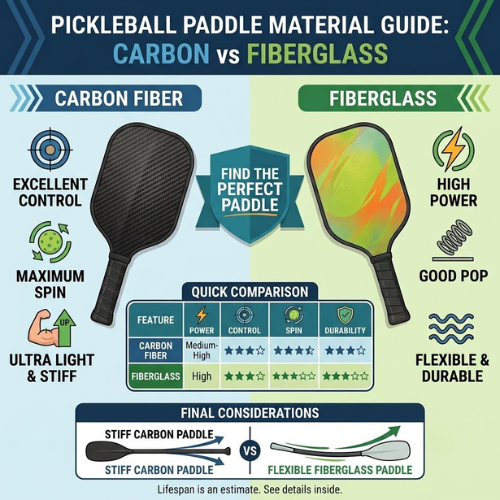
Carbon Fiber vs Fiberglass Pickleball Paddles: Quick Comparison

- Carbon Fiber — More spin, smaller but more responsive sweet spot, rigid direct-feedback feel, holds its surface texture longer — best for players who already have consistent technique
- Fiberglass — More raw power/pop via a flexing “trampoline effect,” larger and more forgiving sweet spot, softer feel — best for newer or casual players still developing consistency
- Hybrid (Carbon + Fiberglass) — A blended face that borrows some spin from carbon and some pop from fiberglass — a middle-ground option for players who don't want to fully commit to one extreme
How Carbon Fiber and Fiberglass Actually Play Differently

Power and control. Fiberglass faces flex slightly on contact, storing and releasing energy with less effort from the player — that's why fiberglass paddles tend to feel “poppy” even on a soft swing. Carbon fiber is stiffer and transfers energy more directly, which rewards precise, technical swings rather than giving you free power. Whichever material you choose, the paddle still has to meet USA Pickleball's official paddle specifications, so any carbon fiber or fiberglass model sold by a major brand is already cleared for sanctioned play.
Spin. This is the biggest practical difference. Carbon fiber has a microscopically textured, slightly abrasive surface that grips the ball longer on contact, generating noticeably more spin on dinks, drives, and serves. Fiberglass is smoother, so it produces less spin even though it produces more pop.
Sweet spot and forgiveness. Because fiberglass faces flex, they spread impact force more evenly across the paddle face — that means a wider, more forgiving sweet spot for off-center hits. Carbon fiber's rigidity gives you a smaller, more punishing sweet spot, but sharper feedback when you do hit it clean.
Durability. Carbon fiber tends to hold its spin-generating texture longer over extended play. Fiberglass faces can smooth out and lose some of their pop over time with heavy use.
Which One Should You Actually Buy?
Your carbon fiber vs fiberglass pickleball paddle decision really comes down to where you are in your game right now:
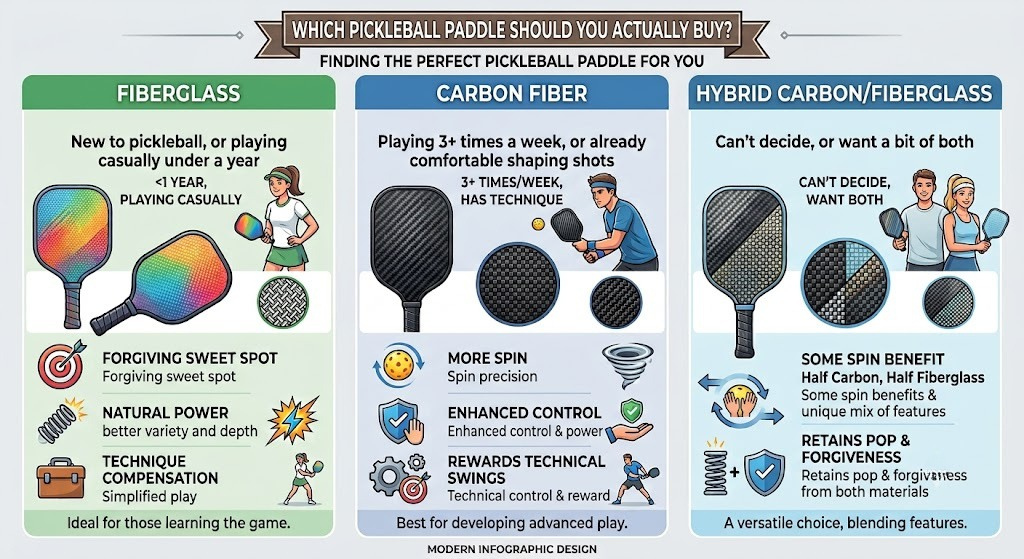
- New to pickleball, or playing casually under a year → Fiberglass. The forgiving sweet spot and free power compensate for developing technique.
- Playing 3+ times a week, or already comfortable shaping shots → Carbon fiber. You'll get more out of the added spin and control than the beginner-friendly pop of fiberglass.
- Can't decide, or want a bit of both → A hybrid carbon/fiberglass face gives you some spin benefit without fully giving up the pop and forgiveness of fiberglass.
Shop by Material: Which QT Pickleball Brand Guides to Check
- Fiberglass-leaning: Franklin Pickleball Paddles — Franklin's signature X-1000 line is a textured fiberglass face, a common recreational/beginner pick.
- Carbon fiber-leaning: CRBN Pickleball Paddles and Diadem Pickleball Paddles — both brands build their flagship paddles around full carbon fiber faces for spin and control.
- Hybrid carbon/fiberglass: Wilson Pickleball Paddles — the Wilson Blaze blends a raw hybrid carbon fiber and fiberglass face for a middle-ground feel.
FAQ: Carbon Fiber vs Fiberglass Paddles
Is carbon fiber always better than fiberglass?
Not for everyone. Carbon fiber is better for spin and control if you already have consistent technique, but fiberglass is often the better choice for beginners because of its larger sweet spot and easier power.
Do carbon fiber paddles last longer than fiberglass?
Generally yes — carbon fiber holds its textured, spin-generating surface longer under heavy use, while fiberglass faces can smooth out and lose some pop over time.
Can a fiberglass paddle still generate good spin?
Yes, but less than carbon fiber. Fiberglass is smoother by nature, so its spin ceiling is lower even with a good spin technique.
What about “raw” carbon fiber vs standard carbon fiber?
“Raw” carbon fiber leaves the weave unpainted/unsealed, which increases surface grit and spin potential even further compared to a painted or gel-coated carbon face.
Bottom Line
There's no universally “better” material in the carbon fiber vs fiberglass pickleball paddle debate — only the better fit for where you are in your game. Fiberglass gives you forgiveness and free power while you're building consistency; carbon fiber gives you spin and precision once you have it. Use the brand guides above to see exactly which face material each paddle in our lineup uses before you buy.
We have not personally play-tested every paddle mentioned in this guide; specs are sourced from official listings and cross-checked against independent review sites.

Pingback: Best pickleball paddles under $100 - QT Pickleball Store