
As an Amazon Associate, we earn from qualifying purchases.
Important: this guide is about paddle features, not medical advice. A paddle cannot cure or prevent tennis elbow. If you have elbow pain, talk to a doctor or physical therapist before you keep playing.
The best pickleball paddle for tennis elbow is usually one that reduces vibration and shock: a thick or dampened core, a moderate weight, and a comfortable grip in the right size. Many players with sore elbows say these features make long sessions more comfortable.
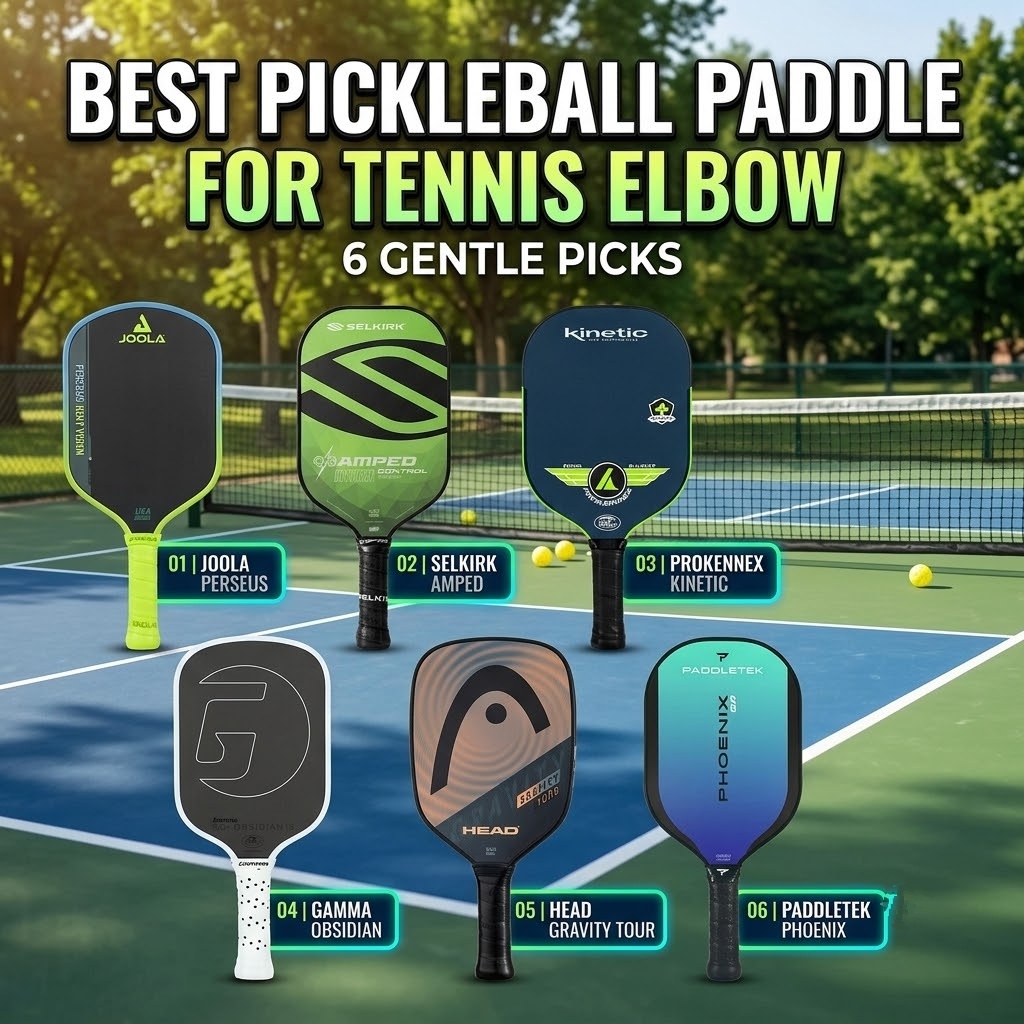
We compared six candidates for the best paddle for tennis elbow from JOOLA, Selkirk, ProKennex, GAMMA, HEAD and Paddletek, and summarized what buyers with arm issues actually say about each one.
Pickleball Paddle for Tennis Elbow: Quick Comparison
- JOOLA Perseus Heat Vision 16mm — Weight: 7.6–8.0 oz — Core: 16mm polypropylene — Dampening: SK Film layer — Best for: all-around comfort
- Selkirk Amped Control Invikta Lightweight — Weight: 7.2–7.7 oz — Core: 16mm X5 polypropylene — Face: fiberglass — Best for: a light, soft feel
- ProKennex Pro Flight — Weight: about 7.4 oz — Core: 11mm polymer — Face: textured carbon — Best for: players who want the most buyer feedback on arm comfort
- GAMMA RCF Obsidian 16 — Weight: 8.2–8.4 oz — Core: 16mm polypropylene — Dampening: foam handle and foam edges — Best for: a stable, damped feel
- HEAD Extreme Lite — Weight: listed between about 7.2 and 8.1 oz — Core: polymer honeycomb — Feature: Control Stabilizer Technology — Best for: a wide, forgiving face
- Paddletek Phoenix G6 — Weight: about 7.5–8.1 oz — Core: about 14mm graphite/polymer honeycomb — Face: polycarbonate — Best for: a cushioned, forgiving feel
Each paddle for tennis elbow here reduces shock in a different way: thick cores, foam, dampening films or cushioned grips.
JOOLA Perseus Heat Vision 16mm
Selkirk Amped Control (Invikta, Lightweight)
ProKennex Pro Flight
GAMMA RCF Obsidian 16
HEAD Extreme Lite
Paddletek Phoenix G6
Prices and stock update on Amazon — click through for the current listing.
1. JOOLA Perseus Heat Vision 16mm — Best Overall Arm-Friendly Paddle
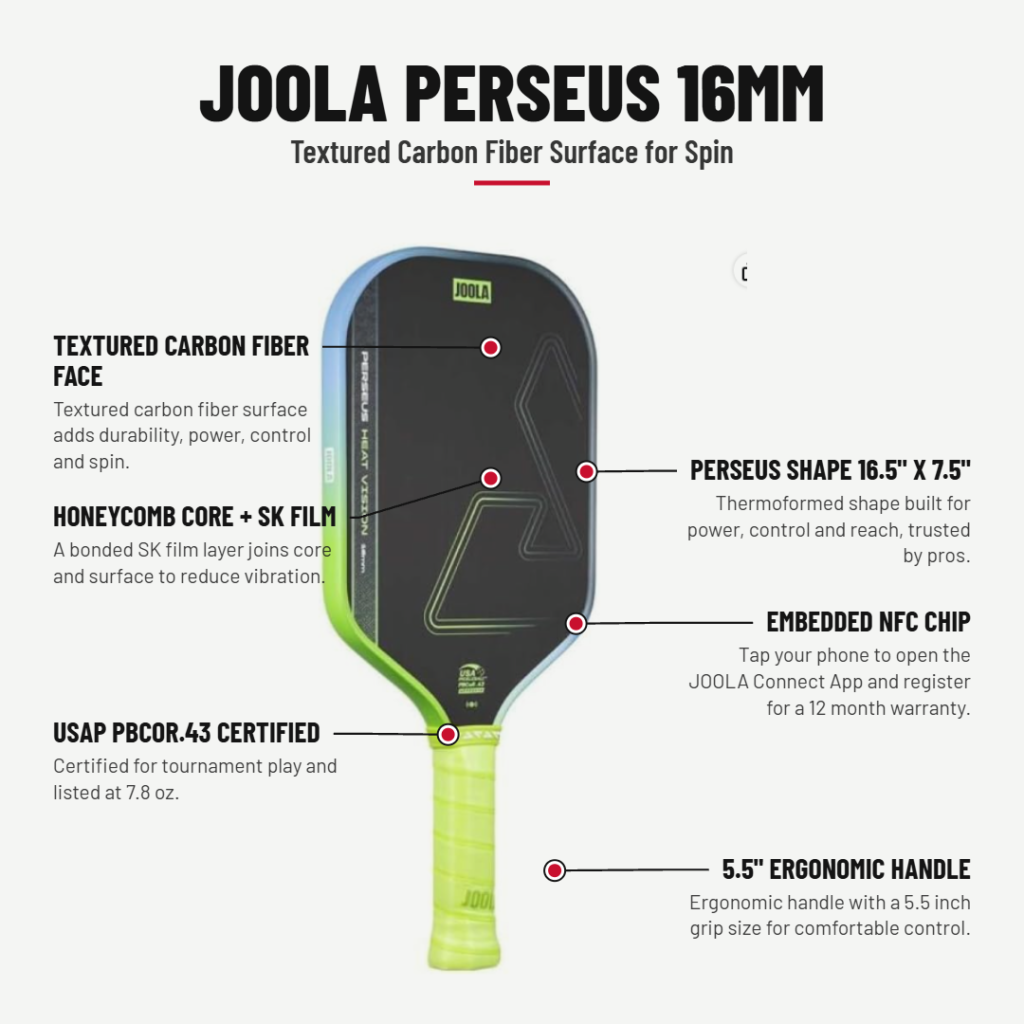
Specs: 16mm thermoformed polypropylene honeycomb · textured carbon face · 7.6–8.0 oz · 16.5″ × 7.5″ elongated · 5.5″ handle · 4.25″ grip
The Perseus Heat Vision combines several features that many players with sore elbows look for: a thick 16mm core, a moderate weight, and a layer JOOLA calls SK Film between the face and core, which the brand says reduces vibration. The frame is thermoformed from the handle through the neck for a stable, solid feel. That mix of features is why it leads our paddle for tennis elbow list.
Two buyers specifically said their elbows felt better after switching to it, and others mention less fatigue in long sessions and soft, easy dinks. The trade-offs are a slightly smaller sweet spot than wide paddles and a very tacky handle that not everyone likes. A few buyers also received paddles that looked used, so inspect yours on arrival. It is our top pickleball paddle for tennis elbow concerns because it balances comfort with real performance.
Who it's for: Intermediate players who want comfort without giving up spin and reach.
2. Selkirk Amped Control (Invikta, Lightweight) — Best Lightweight Fiberglass Option
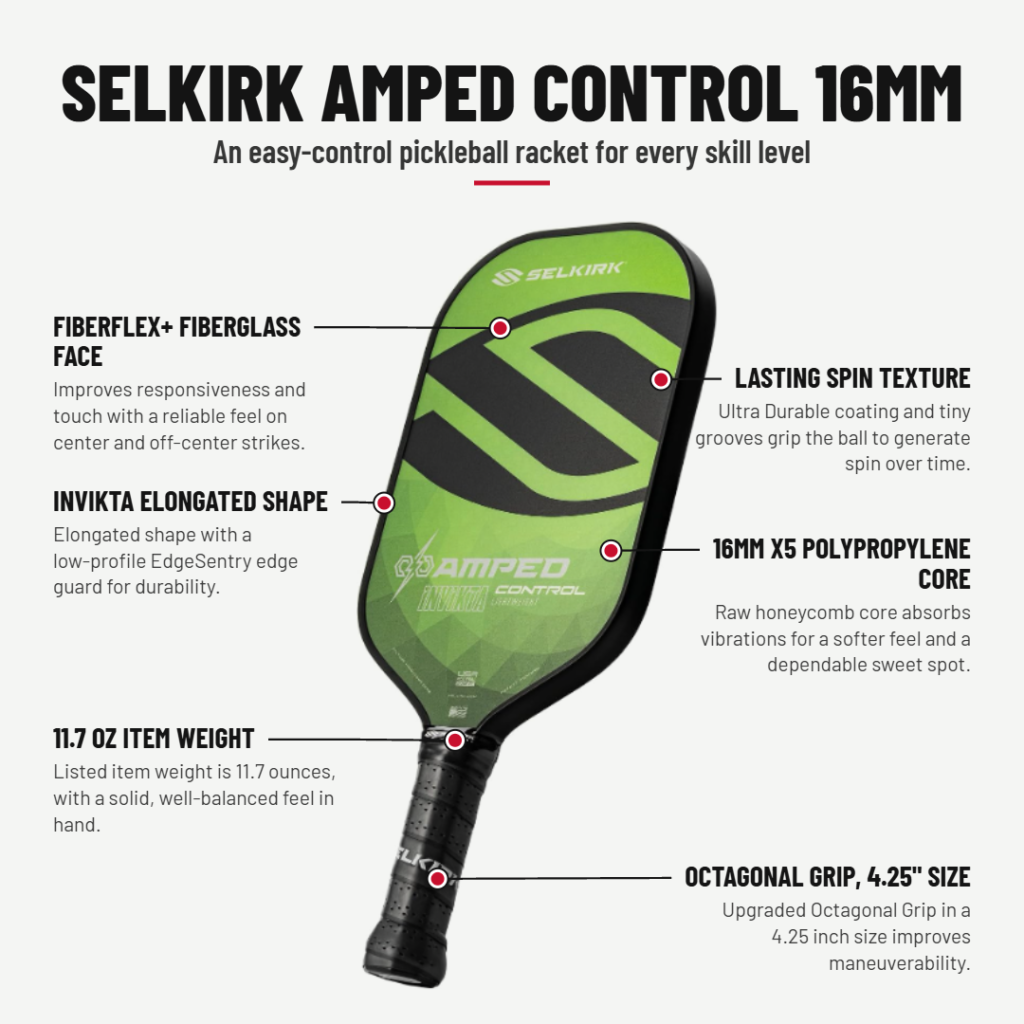
Specs: 16mm X5 polypropylene honeycomb · FiberFlex+ fiberglass face · 7.2–7.7 oz (lightweight version) · 16.5″ elongated · 5.25″ handle · 4.25″ grip
The Amped Control pairs a thick 16mm X5 core with a fiberglass face, which usually feels softer and less harsh than stiff carbon. Selkirk says the X5 core absorbs vibration, and the lightweight version weighs only 7.2–7.7 oz, so there is less mass to swing during long sessions.
One buyer who played about 20 hours with it said their tennis elbow and forearm strain eased. Others like the textured face and easy playability. A few describe the feel as “mushy” and the sweet spot as smaller than expected. Make sure your link shows the Lightweight version; Selkirk also sells a heavier Midweight, and the Amped Pro line is a different paddle. It is the lightest 16mm paddle for tennis elbow concerns on this list.
Who it's for: Players who want a light, soft-feeling paddle for long sessions.
3. ProKennex Pro Flight — Most Mentioned by Buyers with Elbow Pain
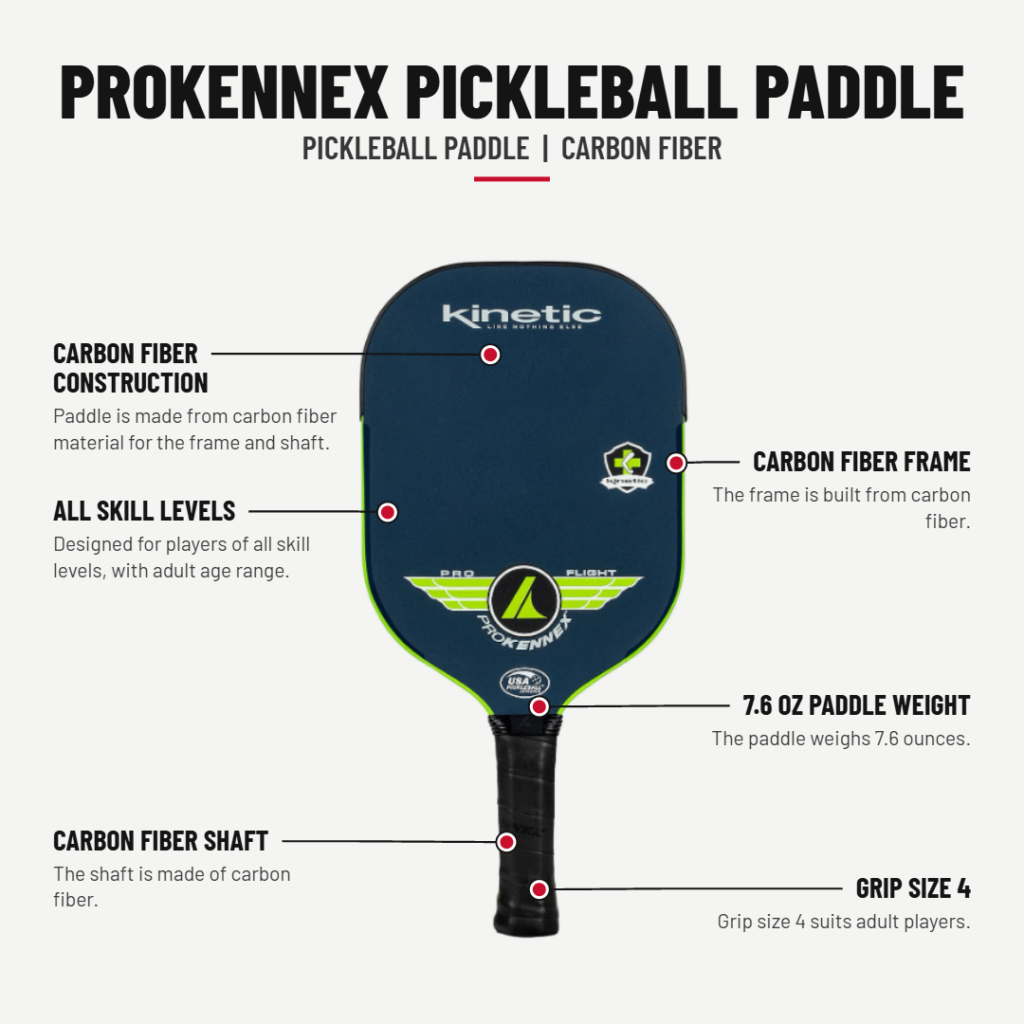
Specs: 11mm polymer core · textured carbon fiber face · about 7.4 oz · 15.43″ × 7.75″ · 5″ handle · Kinetic edge system
ProKennex has a long history in tennis, and among the paddles on this list, the Pro Flight has the most buyer reviews that mention tennis elbow. Many buyers say their elbow pain eased after switching, some mention less shoulder or forearm strain, and players praise its light weight, easy flicks and soft dinks. Its edge uses what ProKennex calls a Kinetic system.
It is different from most paddles here: the core is thin (11mm) and the paddle is light at about 7.4 oz, so comfort here seems to come from the overall design rather than a thick core. Durability is the main concern, with reports of a crack near the bottom and loose edge parts after months of play, and one buyer whose arm still hurt. The Amazon listing has almost no specs, so the numbers above come from a retailer. If you want the paddle for tennis elbow that buyers mention most, start here.
Who it's for: Players with sore arms who want the paddle buyers mention most for elbow comfort.
4. GAMMA RCF Obsidian 16 — Best for Stability and Dampening
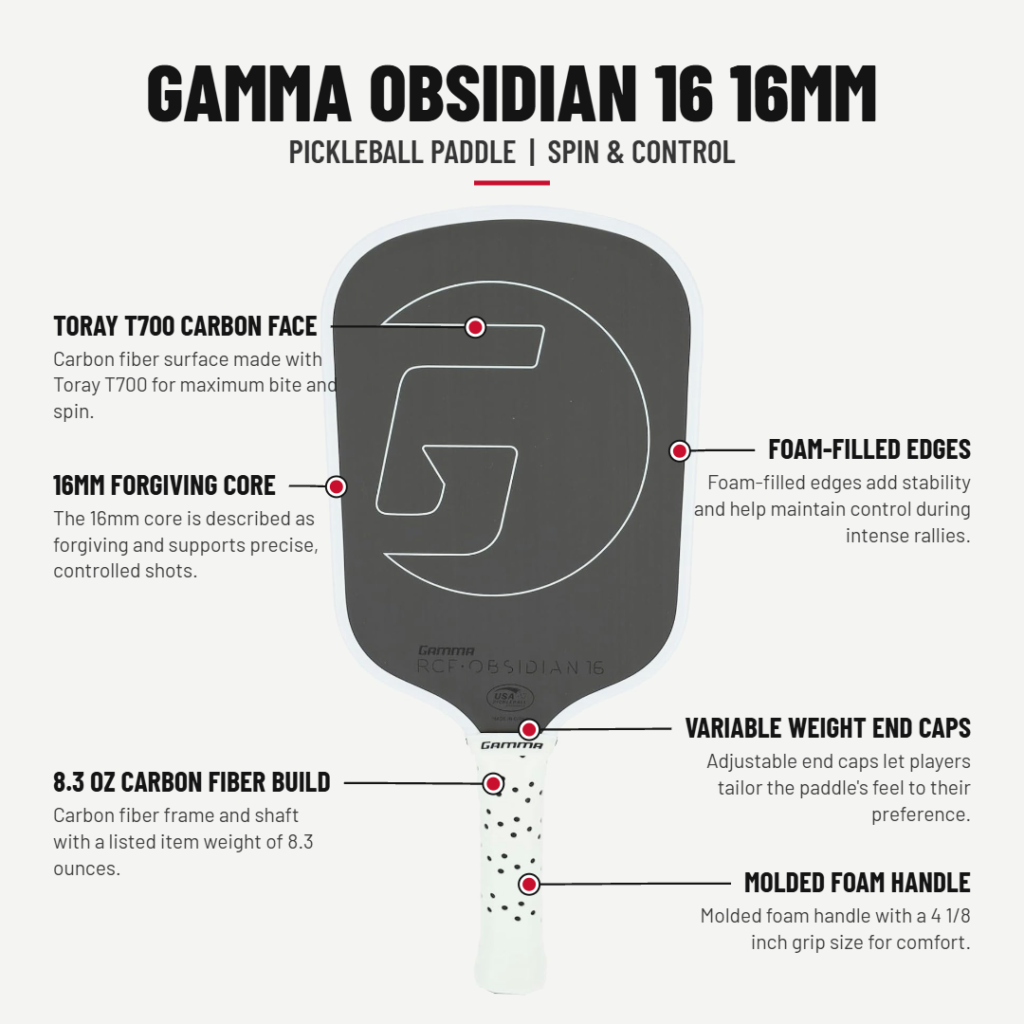
Specs: 16mm polypropylene honeycomb with foam-reinforced core and edges · Toray T700 carbon face · 8.2–8.4 oz · 16.38″ × 7.38″ · 5.75″ foam-molded handle · 4 1/8″ grip
The Obsidian 16 attacks vibration from two directions: a foam-molded handle and foam-reinforced core edges, both of which GAMMA says dampen vibration and add stability. The 16mm core is forgiving, and a swappable handle weight lets you fine-tune the balance.
It is the heaviest paddle on this list at about 8.2–8.4 oz. Some players with arm issues prefer that extra mass because a stable paddle twists less on off-center hits; others find heavier paddles more tiring. One buyer returned it because it felt too heavy for their partner. Buyers praise its touch and balance, and some have bought a second one. No reviews we read mention elbows directly. As a paddle for tennis elbow, it suits players who want stability over light weight.
Who it's for: Players who prefer a heavier, very stable paddle with extra dampening.
5. HEAD Extreme Lite — Best Wide-Face Control Option
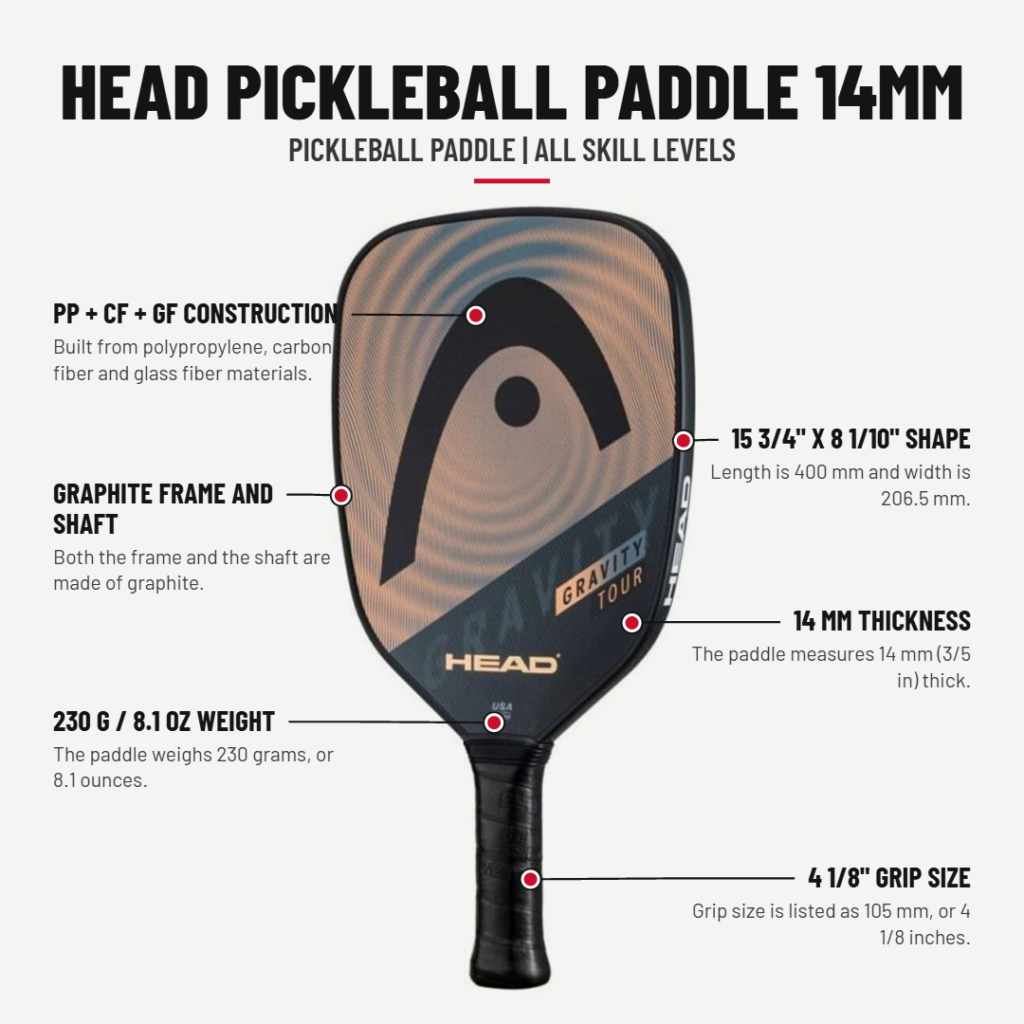
Specs: polymer honeycomb core (14mm per Amazon) · carbon graphite face · weight listed differently by sources (about 7.2–8.1 oz) · wide diamond shape · Control Stabilizer Technology
The Extreme Lite uses HEAD's Control Stabilizer Technology (CST), which HEAD describes as improving stability on contact, and a wide, diamond-shaped face for a forgiving sweet spot. Buyers say it offers more control than the stiffer paddles they used before, and one player with small wrists liked how light it feels.
Be aware of two things. First, sources disagree on its weight: the Amazon listing says 8.1 oz, while a retailer lists 7.2 oz, so check the listing carefully. Second, the core is thinner than the 16mm paddles here. Some buyers wanted more spin, and a few reported edge dead spots or worn texture after long use. The Amazon title currently displays incorrectly, so confirm you are on the Extreme Lite page. As a paddle for tennis elbow, it fits casual players best.
Who it's for: Recreational players who want a wide, forgiving face and an easy feel.
6. Paddletek Phoenix G6 — Best Cushioned Grip and Made in USA
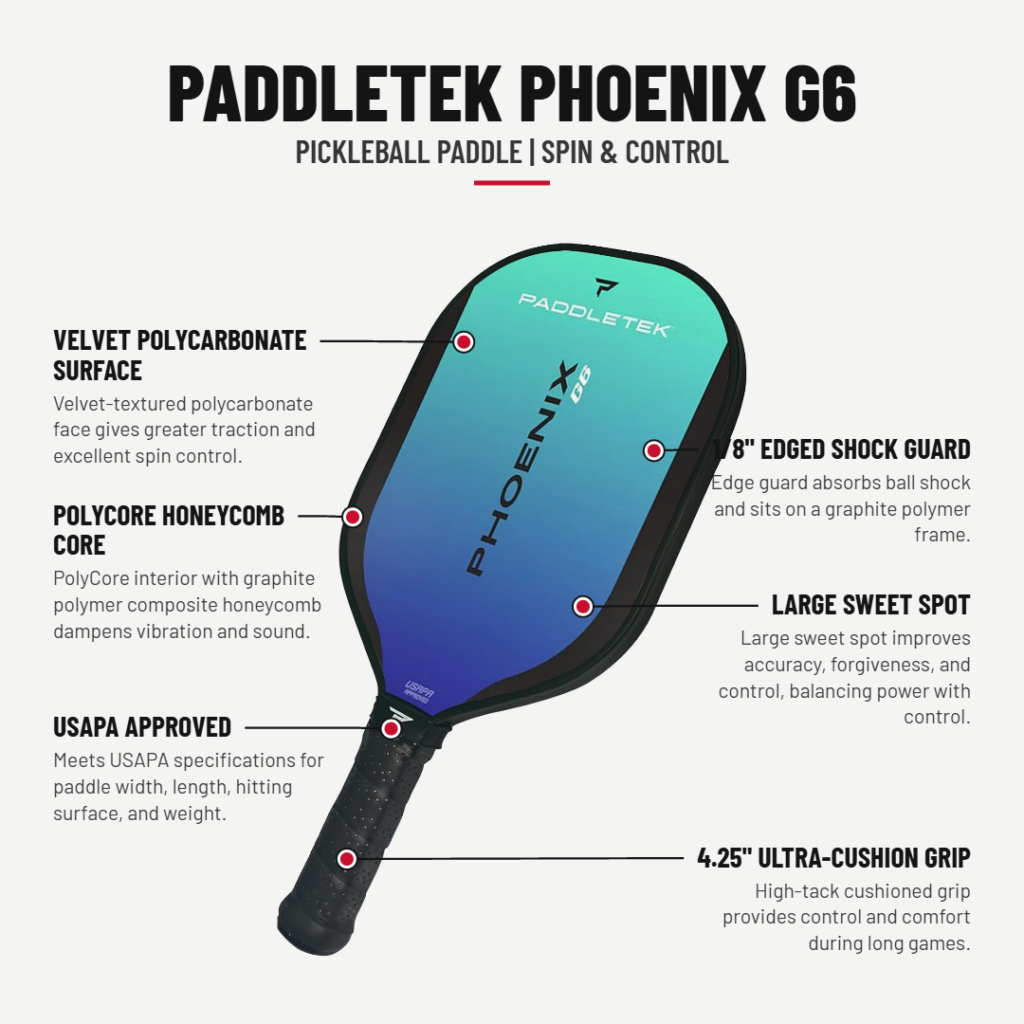
Specs: graphite/polymer composite honeycomb, about 14mm (9/16″) · velvet-textured polycarbonate face · about 7.5–8.1 oz (sources differ slightly) · 15 5/8″ × 7 3/4″ · 5″ handle · 4.25″ grip · made in the USA
Paddletek says the Phoenix G6 core reduces vibration and noise, and the paddle adds a 1/8-inch shock-absorbing edge guard and a thick, cushioned grip. The polycarbonate face has a softer, more muted response than raw carbon, and the wide face gives a forgiving sweet spot. It is also made in the USA.
Buyers describe it as comfortable to hold, easy to play and a good weight, and some have bought several. The concerns are durability: two buyers reported the face bubbling or warping over time, and some found warranty support hard to reach. No reviews we read mention elbows directly, so treat its comfort as a design feature rather than proven relief. It is a comfortable paddle for tennis elbow worries, not a guaranteed fix.
Who it's for: Recreational players who want a cushioned, forgiving paddle made in the USA.
What to Look for in a Pickleball Paddle for Tennis Elbow
When you compare any paddle for tennis elbow, check these features:
- Vibration dampening: thick 16mm cores, foam cores or foam edges, dampening films and foam handles can reduce the shock that travels up your arm.
- Moderate weight: very heavy paddles add strain, while very light paddles can twist more on mishits. Many players with sore arms land around 7.4–8.0 oz.
- Balance: a head-heavy paddle feels heavier to swing. Even weight or slightly handle-heavy paddles are often more comfortable.
- Grip size: a grip that is too small can make you squeeze harder. Overgrips are an easy way to build up a small handle.
- Softer faces: fiberglass and polycarbonate faces often feel less harsh than stiff carbon.
More Than the Paddle: Other Ways to Protect Your Elbow
Choosing a pickleball paddle for tennis elbow is only one part of the picture. Many players also find it helps to warm up before playing, avoid a “death grip” on the handle, let the shoulder and body drive the swing instead of the wrist, and take rest days when the arm is sore. A coach can check your technique, and a doctor or physical therapist can give advice for your situation.
If you want another soft paddle for tennis elbow comfort, see our lightest pickleball paddle picks, our best pickleball paddles for control, and our quietest pickleball paddle guide; soft, damped paddles often show up on all three lists.
Which Pickleball Paddle for Tennis Elbow Should You Buy?
- You want the best balance of comfort and performance: JOOLA Perseus Heat Vision 16mm.
- You want a light, soft fiberglass paddle: Selkirk Amped Control Invikta (Lightweight).
- You want the paddle buyers with elbow pain mention most: ProKennex Pro Flight.
- You prefer a heavier, very stable paddle: GAMMA RCF Obsidian 16.
- You want a wide, forgiving face: HEAD Extreme Lite.
- You want a cushioned grip and a USA-made paddle: Paddletek Phoenix G6.
FAQ
Can a pickleball paddle for tennis elbow cure my elbow pain?
No. A paddle may make playing more comfortable, but it cannot treat an injury. If you have pain, see a doctor or physical therapist.
Is a lighter or heavier paddle for tennis elbow better?
There is no single answer. Lighter paddles are easier to swing, while slightly heavier paddles can feel more stable and twist less on mishits. Many players with sore arms choose a moderate weight and a thick, dampened core.
Does grip size matter when choosing a paddle for tennis elbow?
Yes. A grip that is too small can make you squeeze harder. Check the grip size before you buy, and use an overgrip to build up a small handle.
Are these paddles legal for tournaments?
Most are, but always check the model on the official USA Pickleball approved paddle list.
Final Thoughts
The best pickleball paddle for tennis elbow is one that reduces shock, suits your weight preference and fits your hand. Start with the JOOLA Perseus Heat Vision 16mm for all-around comfort, the Selkirk Amped Control Lightweight for a light, soft feel, or the ProKennex Pro Flight if you want the paddle buyers with sore elbows mention most. Combine the right paddle for tennis elbow with good technique and rest, and get professional advice if pain continues. To compare every play style in one place, see our main guide to the best pickleball paddles.
This article is for general information only and is not medical advice. We have not personally play-tested these paddles; specs come from official listings and are cross-checked against Pickleball Central, Racquet Guys and Badminton Warehouse. Comfort impressions are summarized from buyer reviews.
