


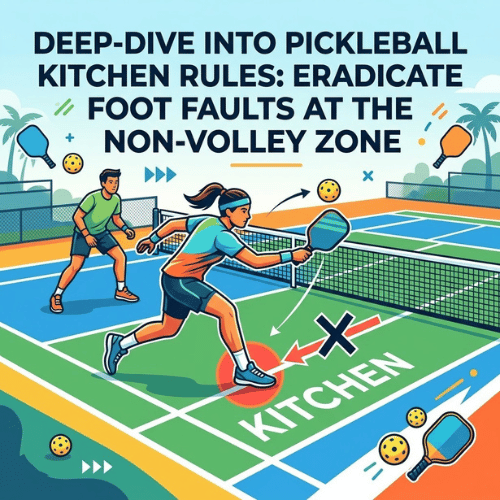
The Non-Volley Zone, affectionately known around the world as “The Kitchen,” is where the most heart-pounding exchanges in pickleball take place. It is the tactical battleground where soft dink rallies suddenly explode into rapid-fire hand battles. However, it is also the primary site of costly unforced errors, foot faults, and heated court arguments.
Mastering official pickleball kitchen rules is essential for any player looking to transition from casual open play to competitive match success.
Understanding the precise physical boundaries of the Non-Volley Zone (NVZ) and the physics of momentum will help you play aggressively at the net without giving away free points. Before stepping up to the kitchen line, make sure you have reviewed our core foundational overview: The Official Rules of Pickleball: Ultimate Beginner to Pro Guide.
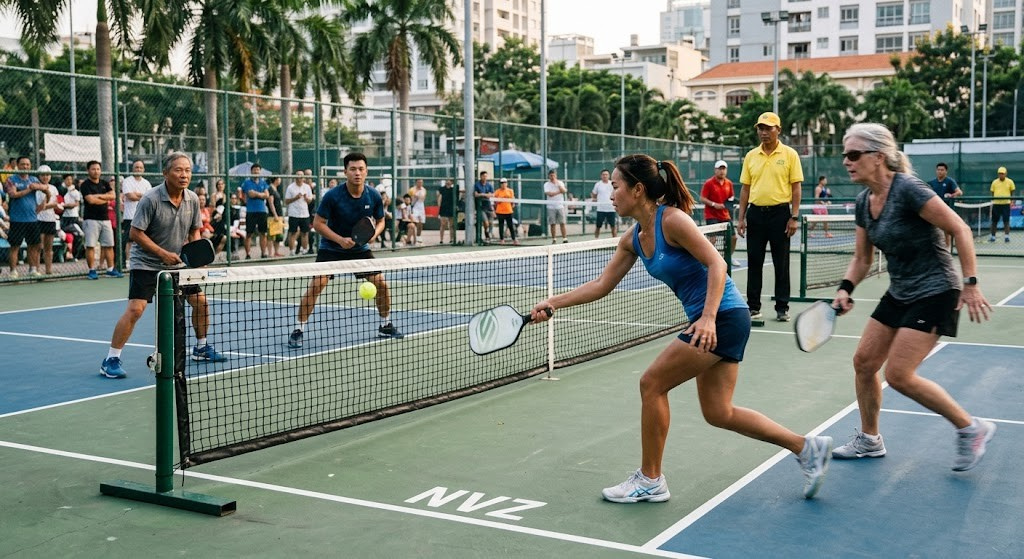
What Exactly is the Non-Volley Zone (The Kitchen)?
The Kitchen is a 7-foot by 20-foot rectangular area extending from the net on both sides of the court. The boundary includes the 7-foot line itself, as well as the left and right sidelines within that 7-foot zone.
The Golden Rule of the Kitchen
The core regulation governing kitchen rules pickleball play is straightforward: You cannot strike a ball out of the air (a volley) while standing inside, stepping into, or touching any part of the kitchen line or kitchen surface.
The Key Misconception: Can You Stand in the Kitchen?
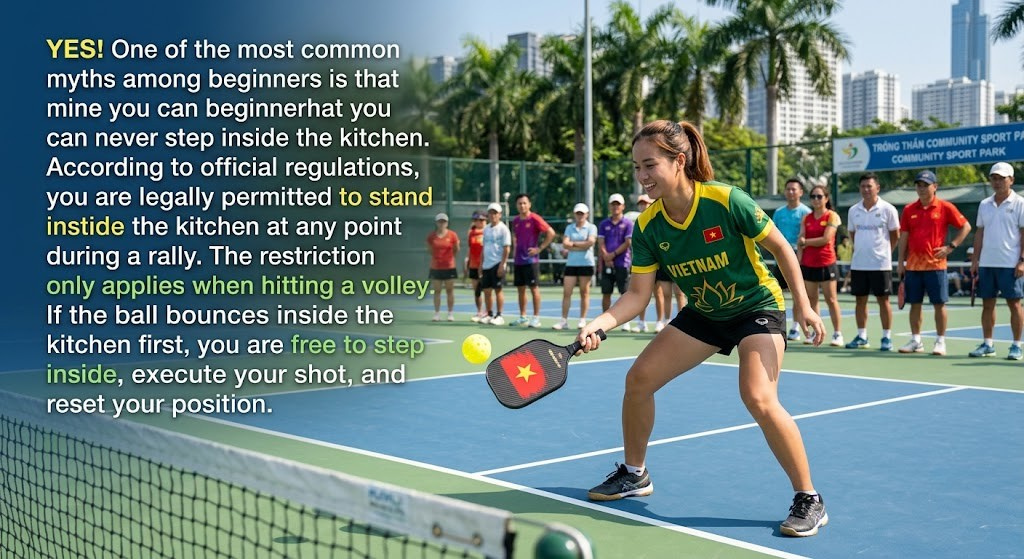
YES! One of the most common myths among beginners is that you can never step inside the kitchen.
According to official regulations, you are legally permitted to stand inside the kitchen at any point during a rally. The restriction only applies when hitting a volley. If the ball bounces inside the kitchen first, you are free to step inside, execute your shot, and reset your position.
The Momentum Rule: The Most Misunderstood Foot Fault
The vast majority of kitchen foot faults do not occur before striking the ball; they happen after the shot due to forward momentum.
Under official pickleball kitchen rules, the act of executing a volley includes both the swing itself and the body momentum generated by that swing.
When Does Momentum Stop?
Your volley motion is not complete until you have full control over your body momentum and stop moving forward.
- The Dead-Ball Fallacy: Even if your volley hits a winning shot and the ball bounces twice on your opponent's side, you commit a fault if your momentum carries your foot onto the kitchen line afterward.
- Equipment Contacts: If your hat, sunglasses, paddle, or towel falls off your body during a volley motion and lands inside the kitchen line, a foot fault is immediately assessed.
- Partner Assistance: If your partner touches you while you are stumbling forward after a volley, and your partner is standing inside the kitchen, you both commit a foot fault.
Quick Reference Guide: Legal Play vs. Kitchen Faults
| Game Scenario | Legal Play or Fault? | Rule Explanation |
|---|---|---|
| Hitting a volley while toe touches the kitchen line | FAULT | The 2-inch kitchen line is officially part of the kitchen zone. |
| Stepping in the kitchen after the ball bounces | LEGAL | You may enter the kitchen freely once the ball has bounced. |
| Hitting a winning volley, then stumbling into the kitchen | FAULT | Momentum is considered part of the volley execution. |
| Jump-volleying (Erne) while landing outside the sideline | LEGAL | As long as your feet establish position outside the NVZ bounds. |
| Dropping a paddle into the kitchen during a volley swing | FAULT | Any item worn or held that touches the NVZ creates a fault. |
The Footwork Solution: Stopping Power & Court Traction
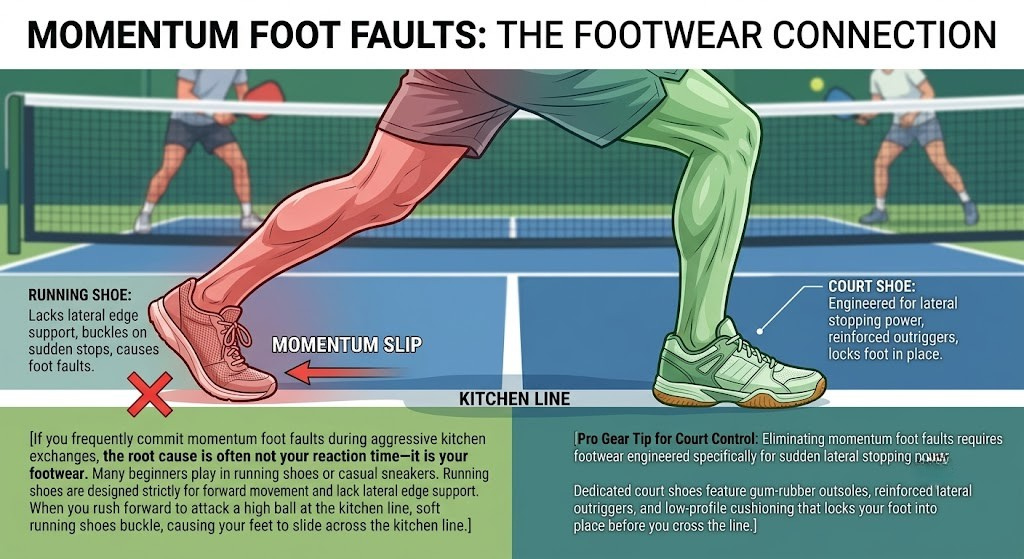
If you frequently commit momentum foot faults during aggressive kitchen exchanges, the root cause is often not your reaction time—it is your footwear.
Many beginners play in running shoes or casual sneakers. Running shoes are designed strictly for forward movement and lack lateral edge support. When you rush forward to attack a high ball at the kitchen line, soft running shoes buckle, causing your feet to slide across the kitchen line.
Pro Gear Tip for Court Control: Eliminating momentum foot faults requires footwear engineered specifically for sudden lateral stopping power. Dedicated court shoes feature gum-rubber outsoles, reinforced lateral outriggers, and low-profile cushioning that locks your foot into place before you cross the line.
Are you looking to upgrade your footwork stability and lock down your kitchen boundary control?
Read Our Guide: Best Pickleball Shoes for Court Traction & Stopping Power
Advanced Kitchen Tactics: Executing the Erne Legally
Once you master basic pickleball kitchen rules, you can utilize advanced techniques like “The Erne” to catch opponents off guard.
An Erne is an advanced volley maneuver where a player jumps over the corner of the kitchen or runs around the outside boundary to hit a ball directly at the net without touching the Non-Volley Zone.
Requirements for a Legal Erne:
- Establish feet outside: Your feet must touch the court surface outside the sideline boundary before or after striking the ball.
- Zero NVZ contact: Neither your feet nor your paddle may contact the 7-foot kitchen line or interior kitchen court surface during the motion.
Compare these net positioning tactics with baseline strategies covered in our breakdown of Standard Pickleball Doubles Rules and solo court coverage in Official Pickleball Rules for Singles.
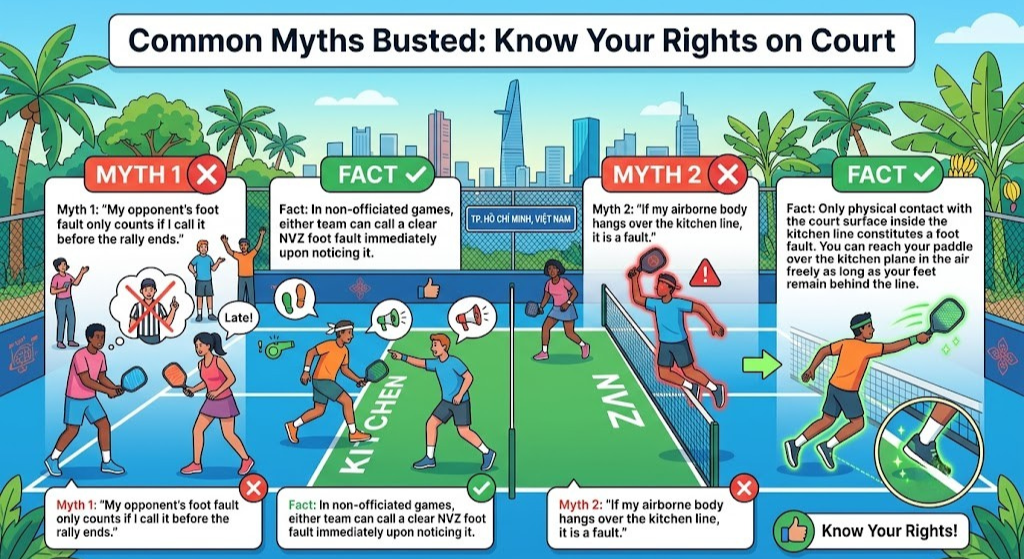
Common Myths Busted: Know Your Rights on Court
- Myth 1: “My opponent's foot fault only counts if I call it before the rally ends.”
- Fact: In non-officiated games, either team can call a clear NVZ foot fault immediately upon noticing it.
- Myth 2: “If my airborne body hangs over the kitchen line, it is a fault.”
- Fact: Only physical contact with the court surface inside the kitchen line constitutes a foot fault. You can reach your paddle over the kitchen plane in the air freely as long as your feet remain behind the line.
For complete regulatory documentation and updated tournament rulebooks, you can cross-reference the official standards on the USA Pickleball Website.
Final Thoughts on Kitchen Boundary Mastery
Mastering pickleball kitchen rules allows you to play with relentless confidence at the net. By understanding momentum mechanics, mastering proper deceleration footwork, and equipping yourself with high-traction court shoes, you eliminate frustrating unforced errors and force your opponents into tough choices.
Gear up with high-performance court footwear, carbon fiber paddles, and tournament accessories at qtpickleballstore.com to dominate the kitchen line during your next match!
